Output power
Up to
0 MVA
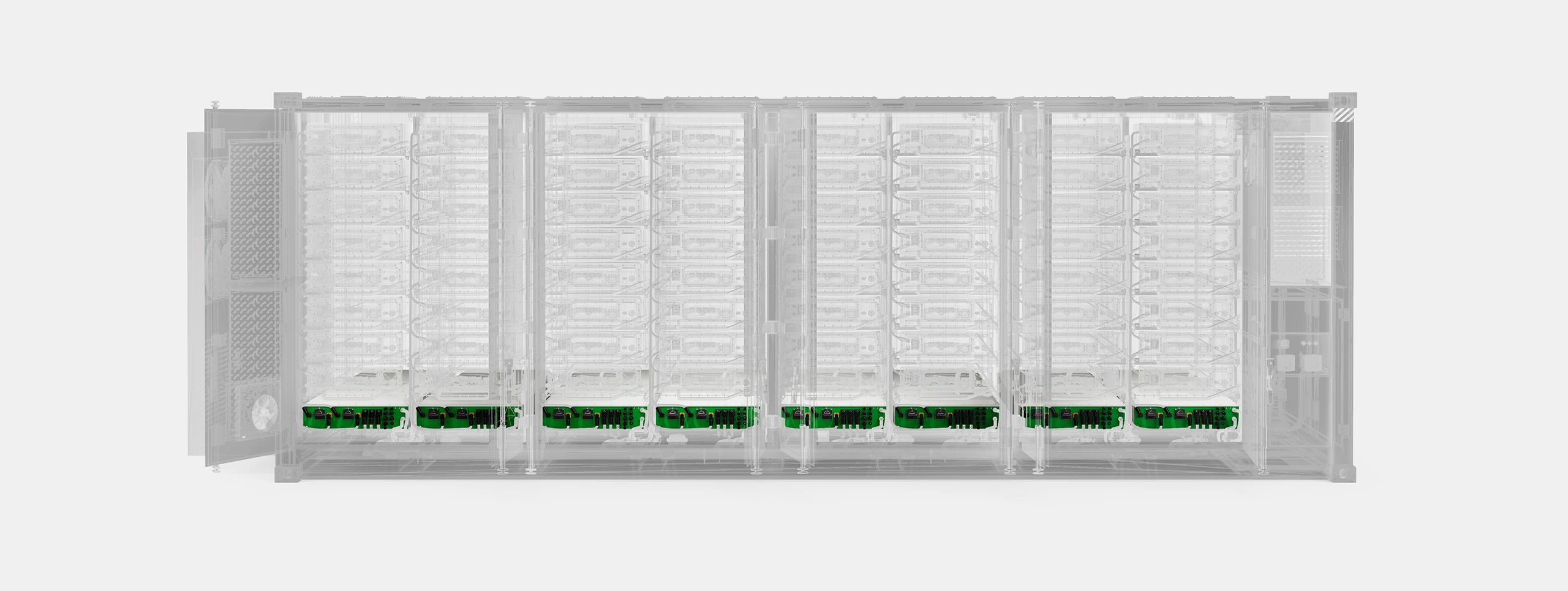
Power distributed across independent AC/DC converters, one for each rack group.
ACBOX looks forward to seeing you at EnerGaia 9 and 10 December

Download the datasheets
Power distributed across independent AC/DC converters, one for each rack group.
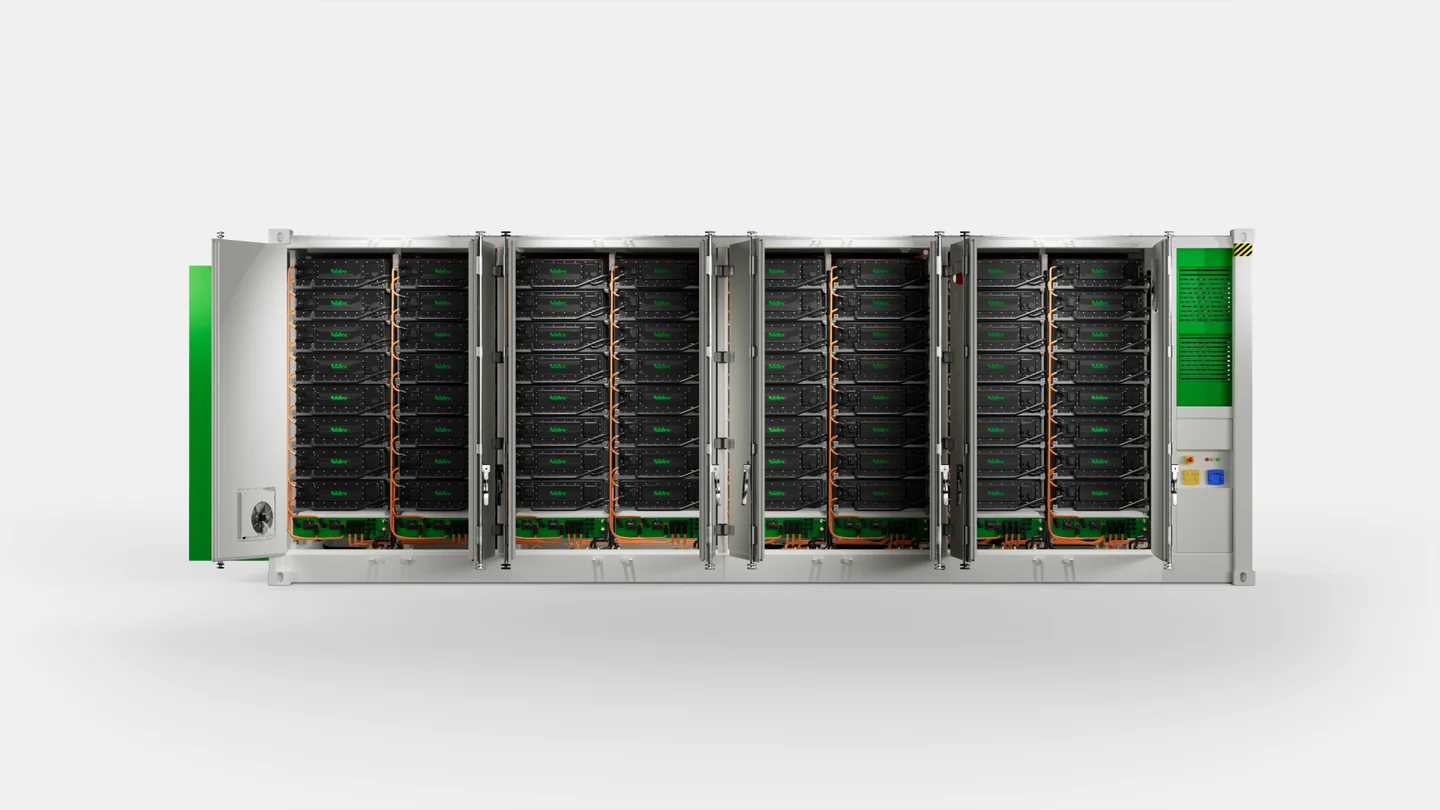
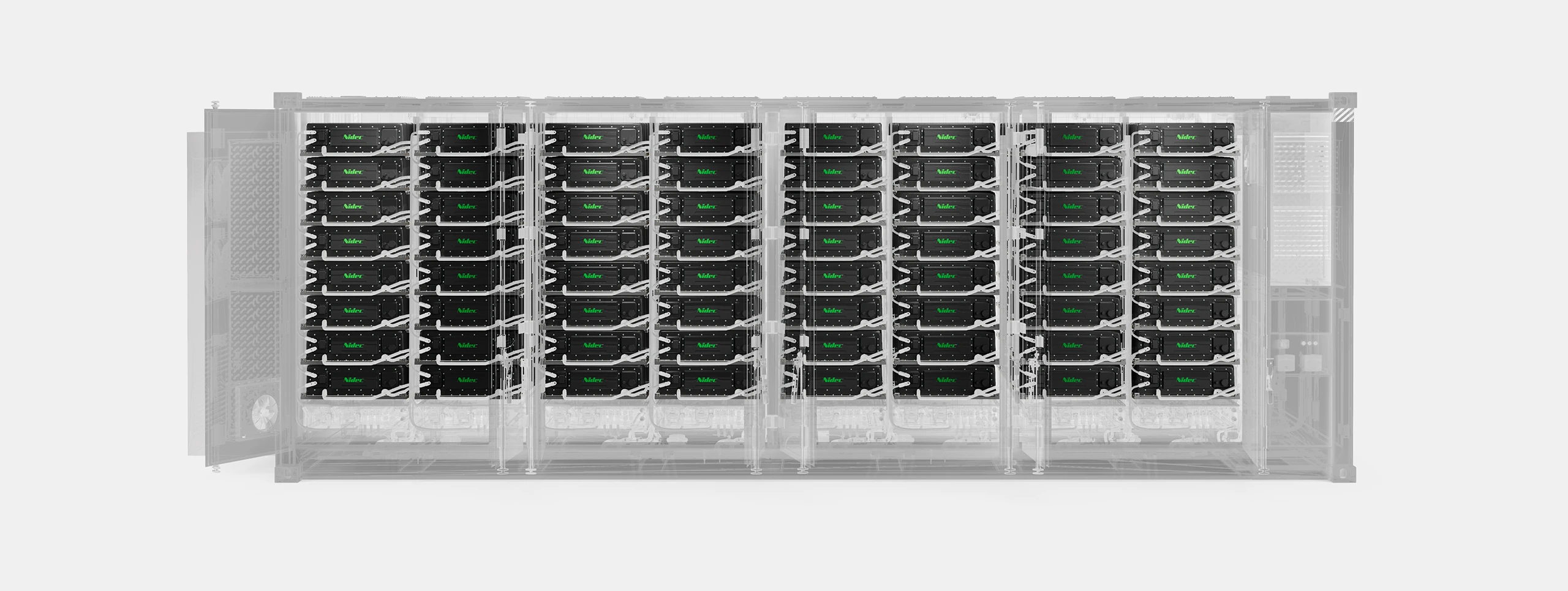
Up to 8.38 MWh per container, with a resolution of 419 kWh per rack: higher output, greater availability, and more accurate SOC estimation.
Configurations designed for both short-term and long-term applications, using the same architecture.
Batteries and PCS in the same high-cube container
A single liquid-cooling unit serves both the battery packs and the PCS. The power electronics operate at the same temperature as the cells, whilst an external PCS experiences a significant rise in temperature on top of the ambient temperature. Reduced overall noise levels.
All active and intelligent components are housed within the same unit and designed to work together. The result is a coherent system, with seamless integration and reliable interoperability.
With a DC block and an external PCS, the cables must be resized whenever there is a change in model, environmental conditions or layout. In contrast, ACBOX reduces the cost of DC-side components and minimizes the risk of short circuits over the long term.
The most critical parts of the system are concentrated in a single component designed and managed entirely by Nidec Conversion. Fewer interfaces between different suppliers, fewer unforeseen issues from the design stage through to the construction site.
ACBOX operates as a stand-alone storage system or alongside power generation plants and large consumers.
A storage system connected directly to the grid, with native grid-forming functions to support voltage and frequency stability.
Stores energy generated during daylight hours and makes it available when needed, increasing the value of the system.
Compensates for wind variability and ensures a more consistent flow of energy fed into the grid.
Ensures continuity and quality of power supply to mission-critical environments.

ACBOX is the result of the integrated design of its subsystems. The outcome is a plug-and-play solution that is simple to install and sophisticated in every detail.
PCS Racks
Liquid-cooled AC/DC converters based on SiC technology, distributed throughout the system to ensure independent management of individual racks.
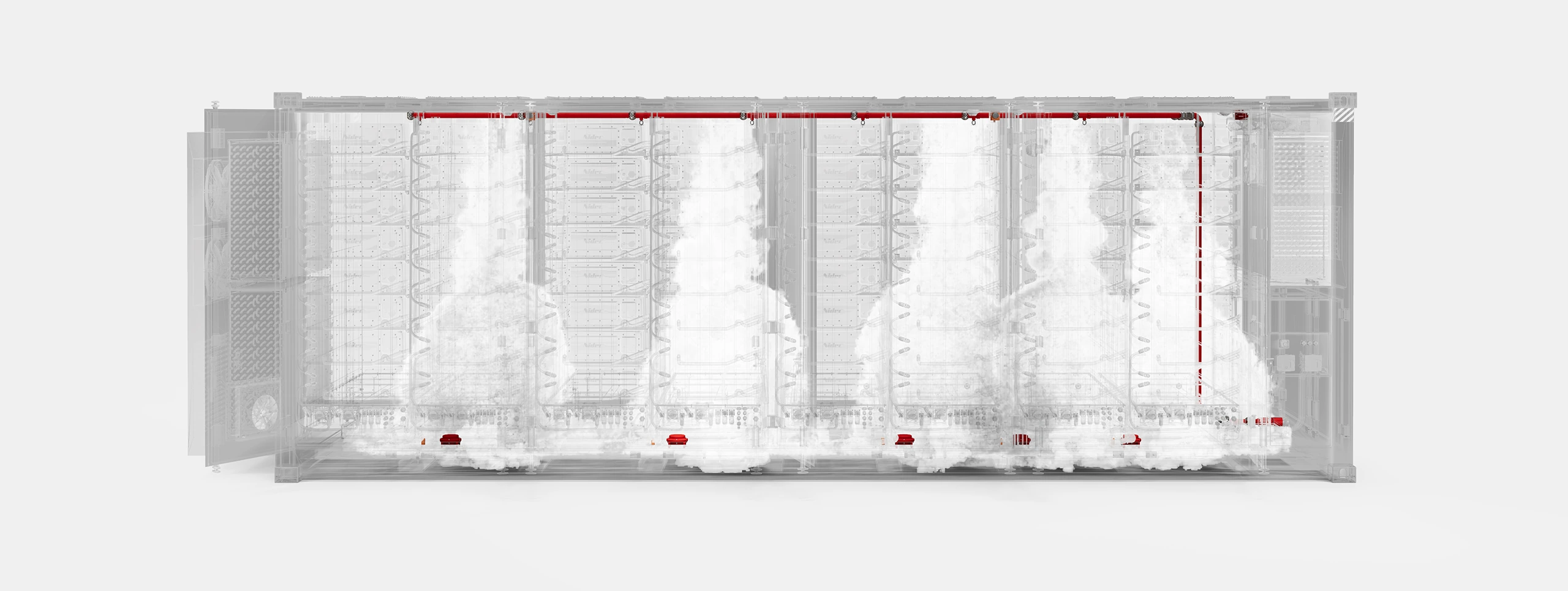
Power conversion, batteries, thermal management and safety: four subsystems designed to ensure efficiency, reliability and longevity.


Dynamic balancing and SOC calibration on every single rack, carried out in the background. No periodic system-wide calibration and no downtime. Maximum accuracy with minimal impact.
The internal air temperature remains stable as external conditions change, with a temperature variation of less than 3 °C between components.
All critical components and connections are accessible via doors on a single side. Inspections and maintenance are quicker and easier.
The containers are positioned back-to-back, allowing for more compact system layouts and a more efficient use of essential space.
Technology derived from Nidec’s E-STATCOM portfolio, chosen by European TSOs for MV applications as well. Virtual inertia and dynamic support reduce voltage and frequency fluctuations and enable the system to take over from traditional generators in the event of a fault or decommissioning.
Cybersecurity was built in from the design stage, in compliance with the KRITIS regulation and the NIS2 Directive.
ACBOX is assembled in Europe, with PCS units manufactured in Europe and software developed entirely by Nidec, from the cells right through to the grid connection point.
The Nidec Conversion team is on hand to help you define the ACBOX configuration best suited to your system, based on your actual application requirements.
A Battery Energy Storage System (BESS) is commonly used in four main configurations: as a standalone installation directly connected to the grid, or alongside a photovoltaic plant, a wind farm, or a large power consumer such as a data center. When connected to the grid, it supports voltage and frequency stability, and ACBOX provides this through native grid-forming capabilities. Coupled with solar power, it shifts energy from peak generation hours to periods of demand. With wind power, it compensates for wind variability. When integrated into a data center, it ensures power continuity and quality, while reducing the impact of unpredictable load fluctuations on the grid infrastructure.
ACBOX delivers up to 4.04 MVA and 8.38 MWh per container, with discharge durations ranging from 2 to more than 8 hours using the same architecture. Energy is organized and managed with a granularity of 419 kWh, ensuring maximum efficiency and availability while mitigating risks associated with short-circuit currents.
Each rack group has its own independent AC/DC converter instead of relying on a single centralized PCS for the entire container. This architecture enables individual rack management with a granularity of 419 kWh. Each converter optimizes the performance of its associated rack, and if a fault occurs, it does not take the entire system offline. As a result, overall system availability remains significantly higher.
ACBOX is assembled in Europe. Electrical and fire safety are ensured through third-party certifications demonstrating compliance with major international standards, including the Large Scale Fire Test according to UL 9540A. Cybersecurity is built into the design from the outset, in compliance with KRITIS requirements and the NIS2 Directive.
DC connections are standardized and fully integrated within the container. In contrast, systems based on a battery block and an external PCS require DC cables to be re-engineered whenever the battery model, environmental conditions, or site layout changes. The integrated architecture and energy granularity reduce the cost of DC-side components and help mitigate short-circuit issues, which become increasingly significant in long-duration applications relying on centralized external PCS solutions.
A grid-following converter operates by synchronizing with an existing grid voltage and therefore requires a voltage reference to function. A grid-forming converter, on the other hand, can autonomously generate that voltage reference. This allows it to actively support the grid and, through synthetic inertia functionality, take over some of the stabilizing functions traditionally provided by conventional generators during outages or after their retirement. In ACBOX, this capability has proven effectiveness, as it is derived from Nidec Conversion E-STATCOM portfolio, which has already been selected by European TSOs for grid support applications, including medium-voltage projects.